Wind energy materials · onshore · offshore · hybrid towers
info@sino-sina.comWhatsApp +86 153 7387 2353

Application cases

Wind materials under real installation constraints.

These photographed case studies explain the site challenge, engineering response and quality-control route. Client names are not inferred where the supplied image record does not establish them.

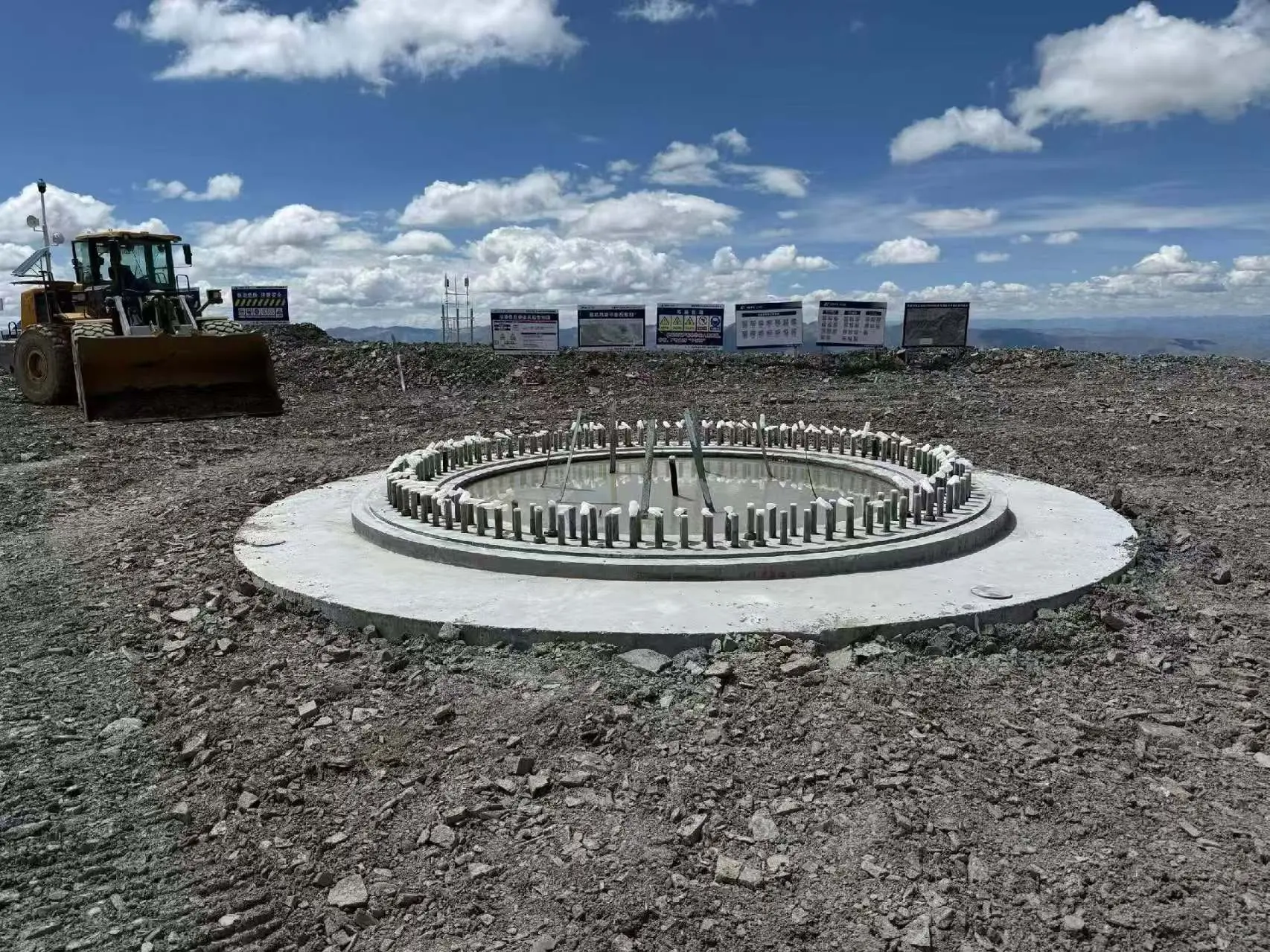
Completed circular wind turbine anchor-cage grout zone before tower installation
01 / Onshore wind / load-transfer zone

Onshore wind turbine anchor-cage grouting

CBGM high-strength non-shrink wind turbine grout

A large annular foundation joint must be filled continuously while maintaining flow, full bearing contact and the specified strength-development sequence.

The product grade and placement route are screened together against grout volume, annulus geometry, mixer output, hose length, site temperature and required release strength.

  • Foundation and seal inspection
  • Water and mixing-time control
  • Flow checks during placement
  • Cube or prism testing to the approved plan
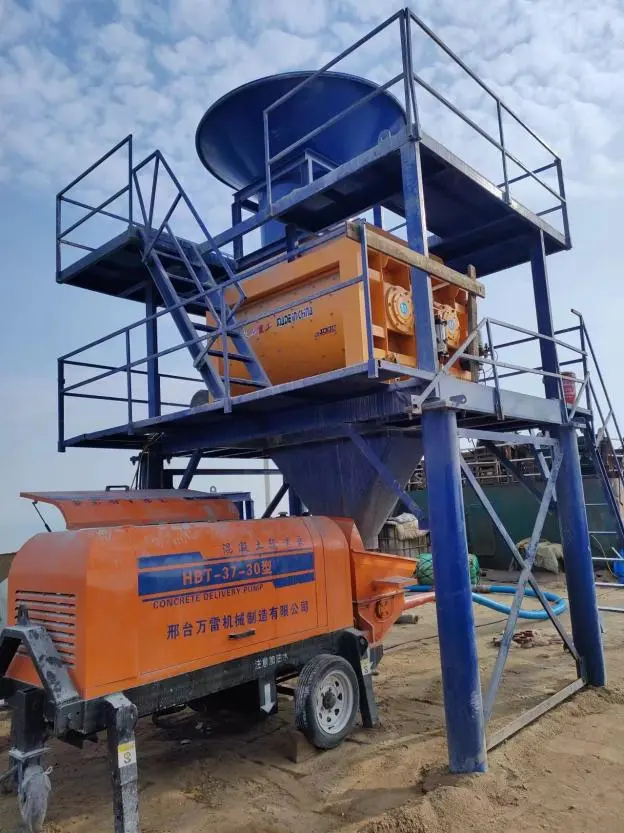
Full-scale offshore wind grout mixing and pumping equipment documented by Sino-sina
02 / Offshore wind / full-scale grout trial

Offshore pile–bucket composite foundation grout trial

High-strength non-shrink offshore wind grout

A 200 MW-class offshore project required the pile–bucket cavity and annular connection grouting method, material performance, equipment capacity and quality-control sequence to be validated together.

The February 2023 internal research report records a full-scale field trial with continuous mixing and pumping, witnessed sampling and a requirement-by-requirement acceptance matrix. Client and testing-party identities are withheld on the public website.

  • Initial, 30-minute and 60-minute flow checks
  • 1-, 3- and 28-day compressive strength
  • Fresh density, air and bleeding control
  • Primary pump, standby pump and pressure monitoring
Open documented trial evidence
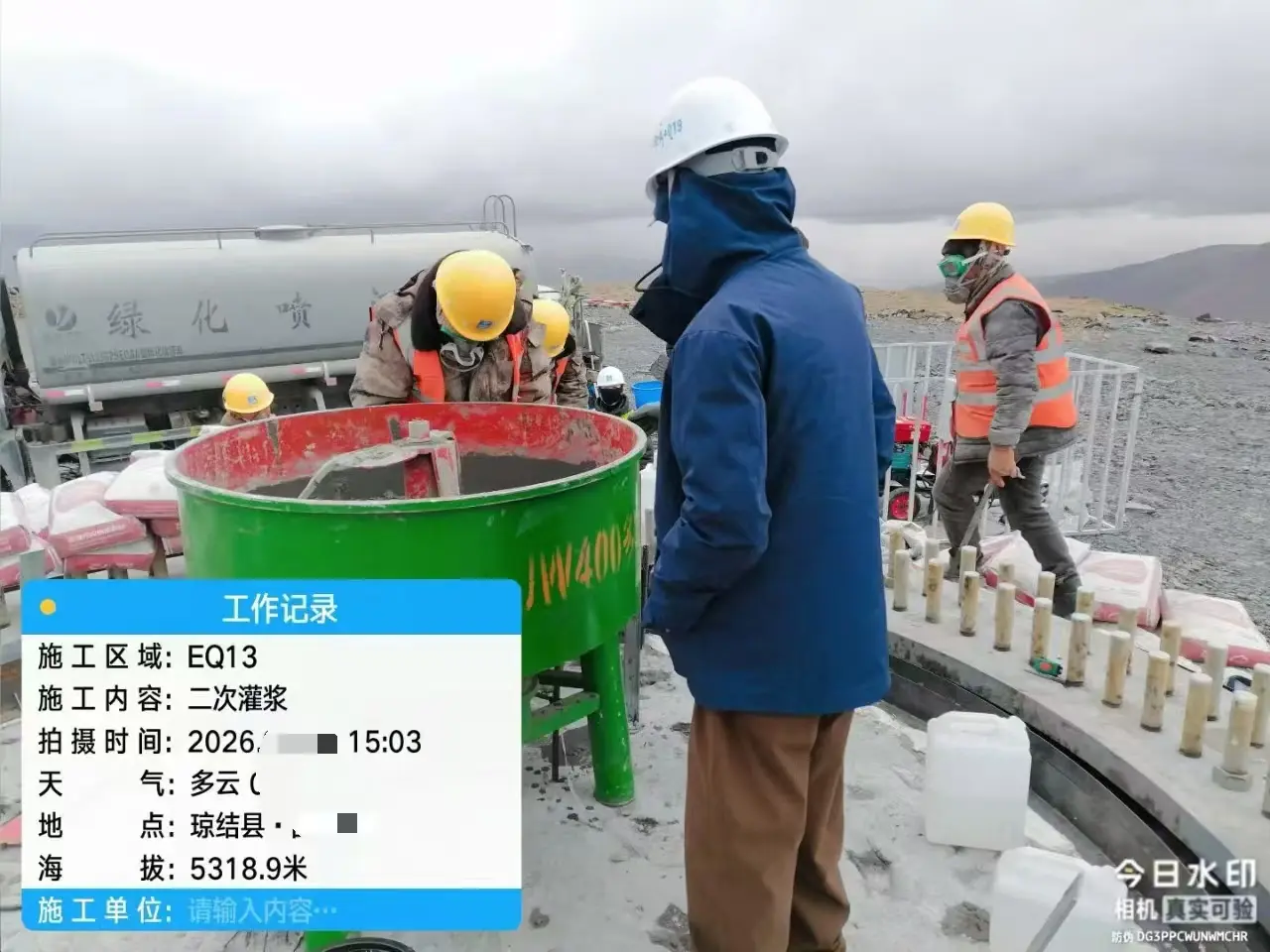
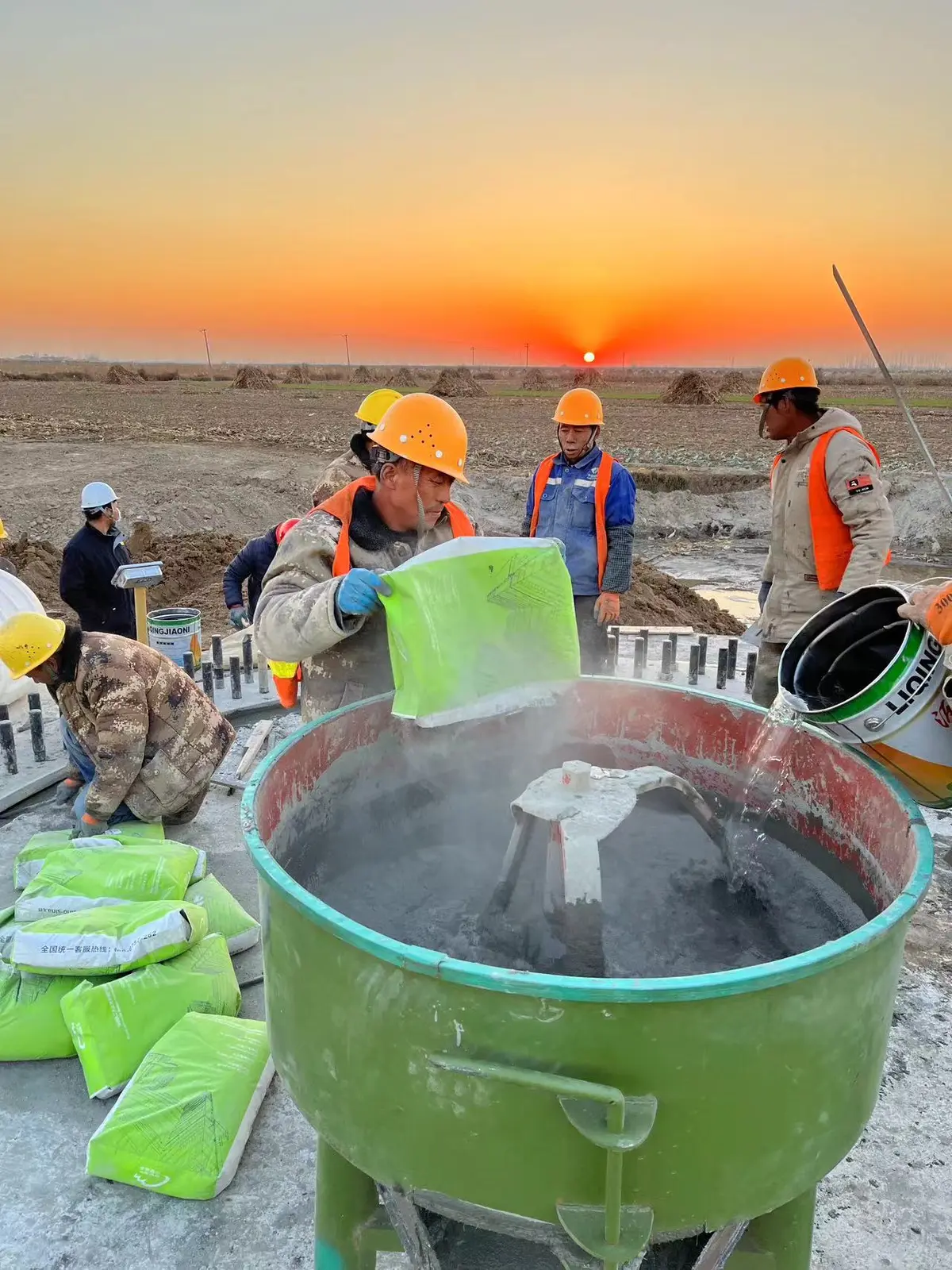
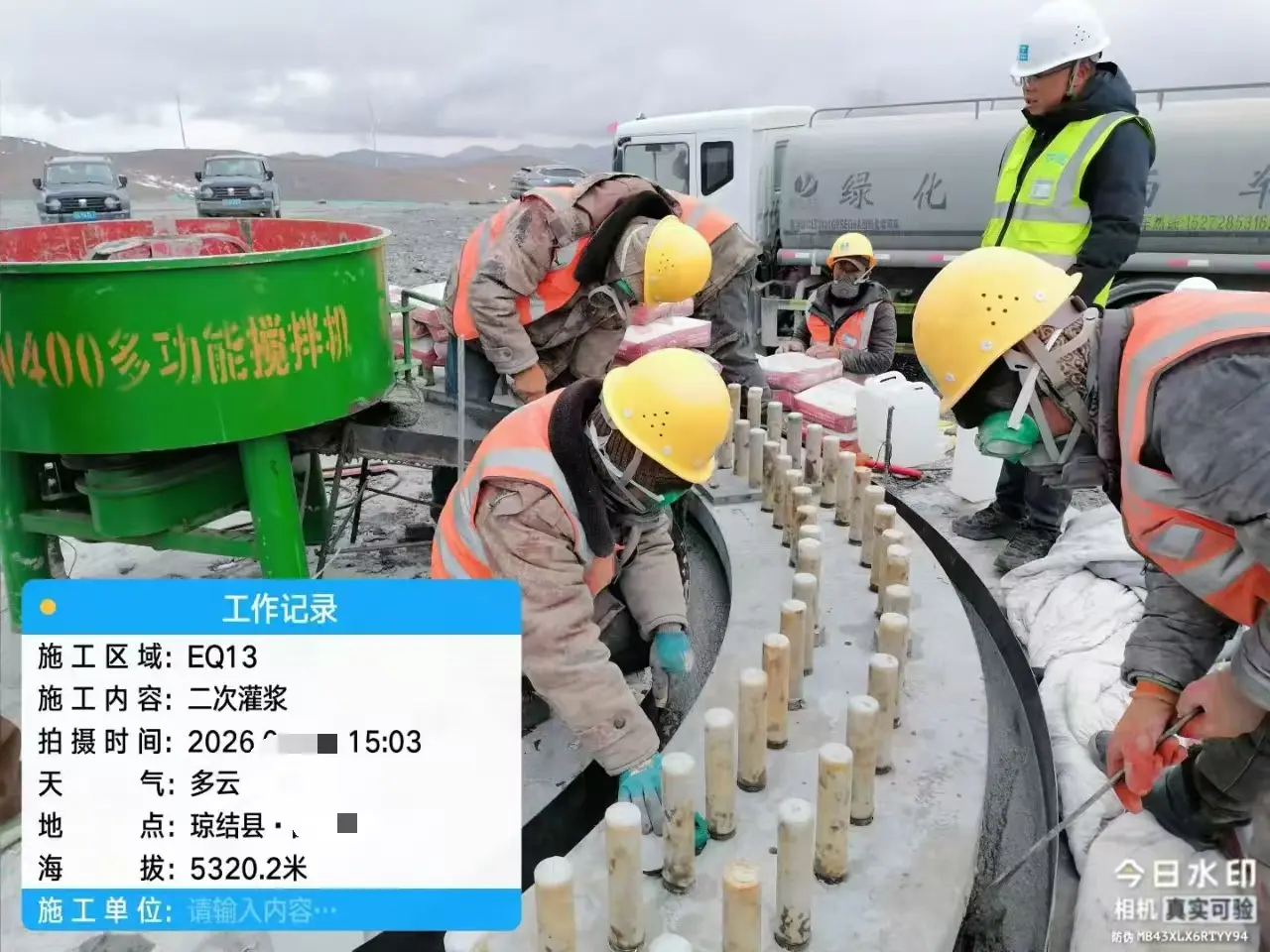
Wind turbine foundation grout being mixed beside the anchor-bolt ring at high altitude
03 / Wind foundation / site execution

Continuous mixing and placement control

Grade-specific CBGM wind turbine grout

Grout properties alone cannot compensate for interruptions, uncontrolled water addition or insufficient mixer and pump capacity.

The method statement links batch sequence, mixer output, standby equipment, pump route, sampling frequency and placement direction before work starts.

  • Calibrated water dosing
  • Continuous batch records
  • Working-flow verification
  • Contingency and standby equipment
Cold-climate wind turbine tower erection documented during Sino-sina field support
04 / Cold climate / temperature-controlled installation

Cold-weather wind foundation grouting

CBGM Antifreeze wind turbine grout

Low ambient and substrate temperatures affect flow retention, early strength, curing protection and the permitted construction window.

The cold-weather route is based on measured material and substrate temperature, conditioned mixing water, insulated placement and strength verification—not ambient temperature alone.

  • Pre-pour temperature record
  • Conditioned materials and water
  • Insulated curing enclosure
  • Release based on verified strength
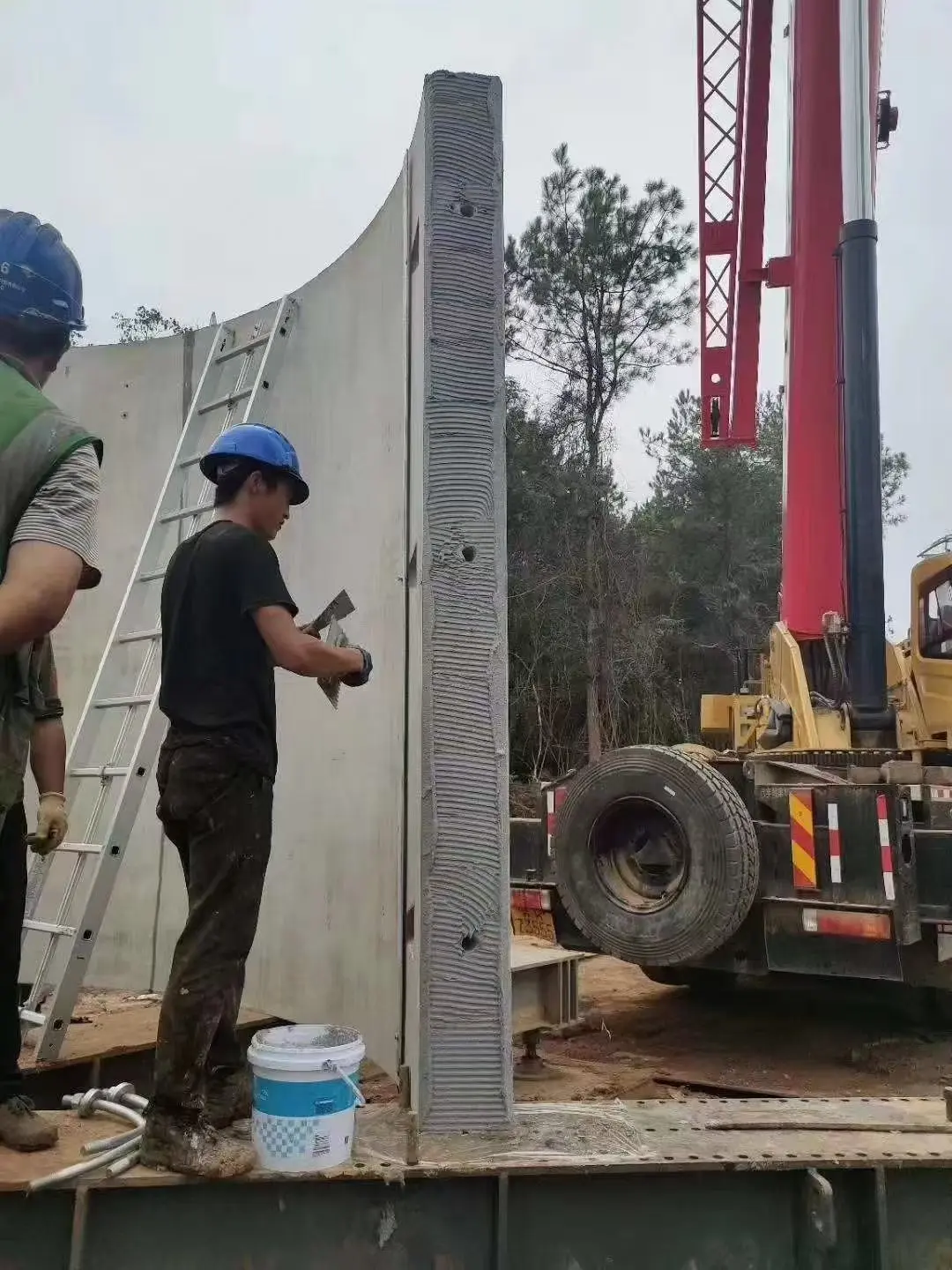
Sino-sina structural splice adhesive applied across a precast wind tower segment joint
05 / Precast hybrid tower / structural joints

Hybrid wind tower segment-joint bonding

Kuaizhuang segment epoxy and duct grout system

Precast tower segments require controlled joint thickness, complete adhesive contact and coordinated duct grouting within the erection sequence.

Substrate condition, mix ratio, application time, sag resistance, segment alignment and duct-grout flow are managed as one installation system.

  • Substrate cleanliness and dryness
  • Component ratio and mixing record
  • Joint-thickness inspection
  • Duct outlet and bleed checks
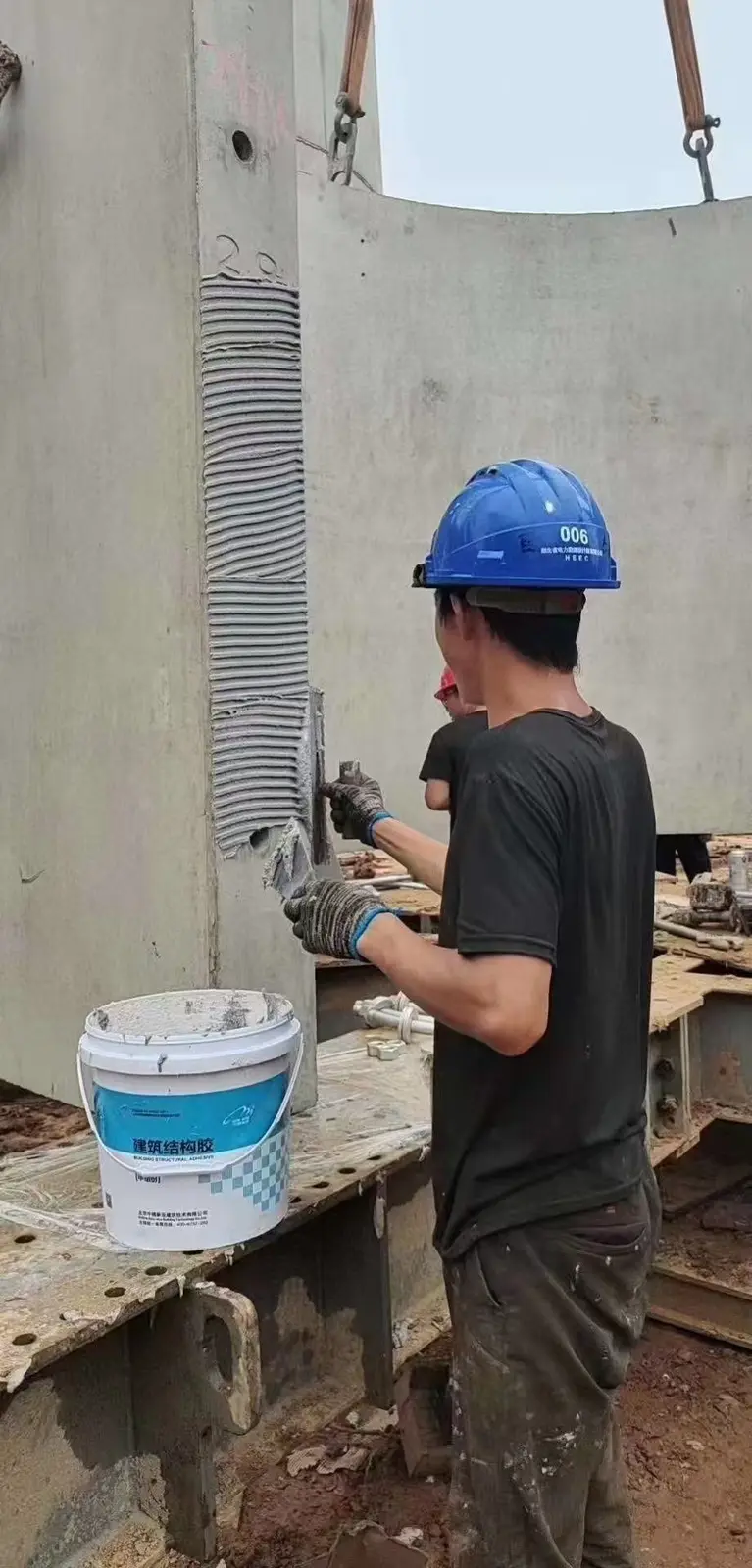
Sino-sina structural splice adhesive applied with a serrated trowel at a precast wind tower segment joint
06 / Hybrid wind tower / elevated joint work

Hybrid tower epoxy placement at segment joints

Kuaizhuang two-component segment epoxy adhesive

Elevated segment work requires the adhesive to remain workable long enough for application while resisting sag and maintaining continuous contact across the designed joint thickness.

Component ratio, mixing uniformity, substrate condition, joint temperature, application time and final contact are checked as a coordinated erection operation.

  • Component A/B ratio record
  • Ambient and substrate temperature
  • Uniform colour after mixing
  • Joint coverage and squeeze-out inspection

Photographed field workflow

From batch preparation to the wind structure.

These supplied site images are used as engineering evidence, with captions limited to what the photograph and company record establish.

Wind turbine foundation grout mixed beside a high-altitude anchor-bolt ring
01

Controlled mixing

Water dosing, batch time and mixer output are agreed before continuous placement begins.

Secondary grout placement around a wind turbine foundation anchor-bolt assembly
02

Continuous placement

The placement direction and grout front are managed to reduce trapped air and interruption risk.

Completed circular wind turbine foundation grout zone
03

Completed load-transfer zone

The finished surface, anchor system and records are checked before the next installation stage.

Sino-sina structural splice adhesive applied to a precast wind tower segment
04

Segment adhesive control

Component identity, ratio, substrate condition, ridge coverage and working-temperature route are checked before assembly.

Technical enquiry

Looking for a case route with similar conditions?

Include the wind structure and connection drawing, geometry or bond line, volume, specified performance, temperature, standards, installation window and equipment.